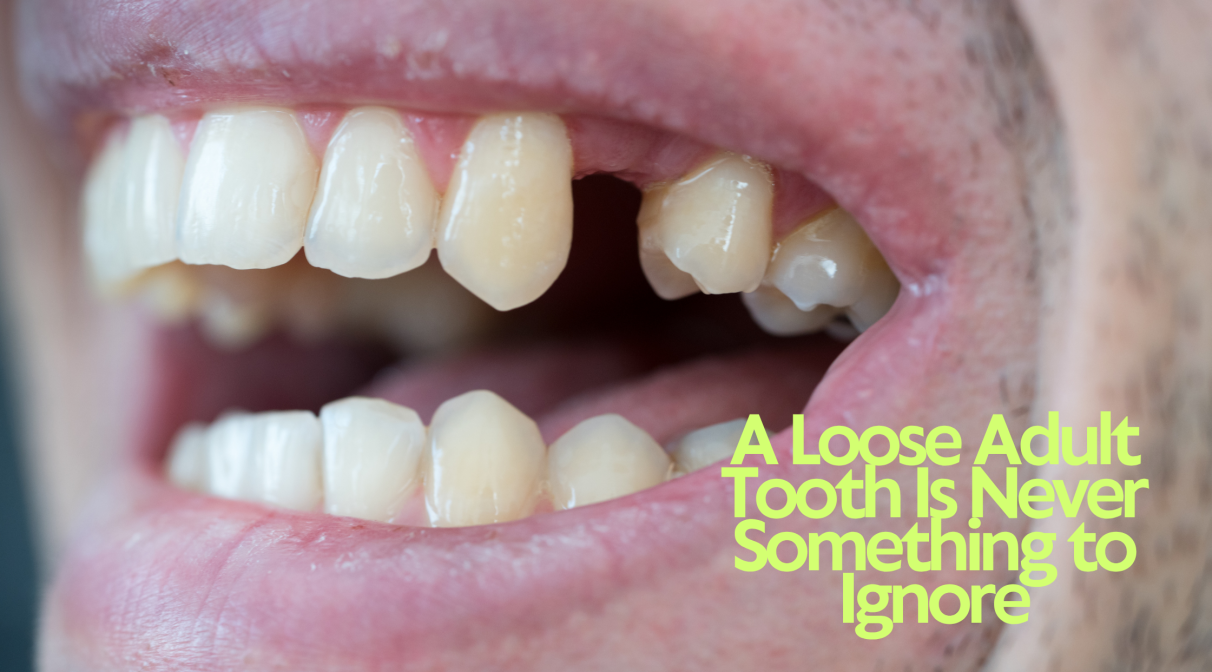
A Loose Adult Tooth Is Never Something to Ignore
A wobbly tooth might seem like something that can wait. It can’t.
When you’re a child, a loose tooth is exciting. As an adult, it’s a completely different story.
Adult teeth are designed to stay firmly in place for life. So if one starts to feel loose, move when you bite, or suddenly feels different, it’s important not to ignore it.
The good news? The sooner we find out what’s causing the problem, the more options we may have to save the tooth.
Why is my adult tooth loose?
There are several possible causes, from an injury or excessive biting pressure to changes around the tooth. One of the most common causes, however, is periodontal (gum) disease.
Periodontal disease is a bacterial infection that affects the gums and the supporting structures around your teeth. As it progresses, inflammation can cause the bone supporting the teeth to gradually disappear.
And this is where things can become serious.
You may have no pain at all, yet significant damage can still be taking place beneath the gum line.
Signs of gum disease can include:

A loose tooth isn’t necessarily a lost tooth. Depending on the cause and how much supporting tissue remains, treatment may be able to stabilise the situation and help you keep your natural tooth.
So, can a loose tooth be saved?
Sometimes, yes.
At Hello Dental, we first need to understand why the tooth is loose. This may involve a detailed examination, gum assessment and appropriate X-rays to assess the health of the tooth and the bone supporting it.
If gum disease is responsible, treatment may focus on controlling the infection and improving the health of the gums and supporting tissues.
If the tooth has suffered trauma, excessive forces or another problem, the appropriate treatment will depend on the individual circumstances.
But sometimes, despite everyone’s best efforts, a tooth simply can’t be saved.
And that’s when we start talking about replacement.
What are the options if a tooth needs to be removed?
If a tooth has to be lost, there are several ways it can potentially be replaced.
A denture
A removable denture can replace one or several missing teeth. It can be a relatively straightforward option, although some people don’t like the idea of having something removable.
A dental bridge
A bridge uses neighbouring teeth to support a replacement tooth. For the right patient, this can be an effective solution, but it does involve using the adjacent teeth as part of the restoration.
A dental implant
For many patients, a dental implant is considered the gold-standard option for replacing a missing tooth.
An implant is a small titanium fixture placed into the jawbone, acting as an artificial tooth root. Once healed, it can support a custom-made crown designed to look and function like a natural tooth.
The result is a fixed replacement that doesn’t rely on neighbouring teeth for support.
And importantly, an implant can help maintain the bone in the area where the tooth has been lost. Find out more : https://hellodental.co.uk/treatment/dental-implants/
But implants aren’t just about replacing a tooth
When a tooth is removed, the bone that previously supported it no longer receives the same stimulation. Over time, this can contribute to bone loss and changes to the shape of the gum and jaw.
A dental implant replaces the root as well as the visible tooth, which is one of the reasons implants are such an important option when replacing missing teeth.
However, implants aren’t automatically suitable for everyone. Your gum health, bone levels, general oral health and the condition of the surrounding teeth all need to be considered first.
Healthy gums are particularly important. Active periodontal disease needs to be brought under control before implant treatment, as gum health plays an important role in the long-term success of implants.
Don’t wait for it to fall out
If you’ve noticed an adult tooth becoming loose, don’t wait until it becomes painful or falls out.
A loose tooth is a warning sign, not something to simply put up with.
Early assessment could mean there’s an opportunity to treat the underlying problem and save the natural tooth. And if the tooth cannot be saved, finding out sooner gives you more time to consider the best replacement option — including whether a dental implant is appropriate.
At Hello Dental in Colchester, we can assess loose or failing teeth and talk you through your options in straightforward, jargon-free terms.
If you’re worried about a loose tooth, book an assessment with our team rather than waiting to see what happens.
And if you have already lost a tooth, our experienced team can discuss whether dental implants in Colchester could be the right solution for you.
Your teeth shouldn’t be loose. If one is, it’s worth finding out why.
Back to Blog